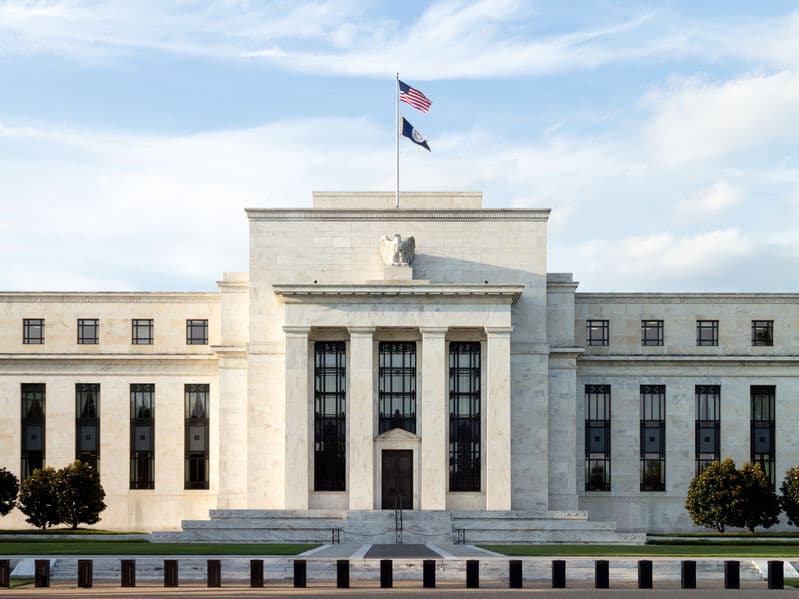
Fed Reset: Less Guidance, More Uncertainty, Higher Stakes
The first FOMC meeting under Kevin Warsh delivered what many expected on the surface: no change to the Fed’s target rate. Was the inflation tough guy routine performative? Possibly. However, beneath that, the shift in tone, structure, and philosophy was certainly meaningful.
What has changed
Warsh’s first public statement in mid-June as chair was highly revealing in how different it suggests Fed communication and transparency will be during his tenure:
- It was intentionally short and lacked the forward guidance prior Fed governors believed added policy credibility
- Warsh admitted that he declined to submit his own rate projections to the dot plot describing the practice of individual policy projections unhelpful
- Five new task forces were introduced, covering communications, the balance sheet, data usage, productivity and jobs, and inflation frameworks
- Despite the change in style and method, he emphasized price stability as the core mandate, saying there is no reason to revisit the 2% long-term target
Warsh is clearly trying to move the Fed away from a highly managed, Fed Chair centered, communication regime toward something more collaborative, but also less predictable.
For investors this may mean the nearly 20-year market playbook where investors have arguably spent more time trying to interpret the Fed than the economy and corporate prospects no longer works.
What we should take from it
One Warsh comment from his press conference stood out to that latter point: “Financial markets work less efficiently when they ask a question: How will the Federal Reserve react to that incoming information?”
I think that is directionally healthy and would support a shift to a Fed that moves a bit further into the periphery. It would push the financial system toward economic fundamentals and away from central bank interpretation as a strategy. Frankly, the dissecting of every Fed statement and Fed governor’s comments has been ridiculous in recent years. Paragraphs have been spent on what the difference is between inflation being “elevated” versus “somewhat elevated.” With that said, this transition is also likely to be potentially messy for markets as investors adapt.
On the flip side, as we have discussed in LNW quarterly commentaries, the Fed Chair is only one vote. Warsh needs seven votes to act, which means he still has to build support across the rest of the FOMC which is clearly his intention. That matters in thinking about both the path and timing of policy but also suggests concerns over radical policy changes were likely overblown.
Three takeaways that matter for portfolio strategy
- Less forward guidance means more uncertainty and thus volatility
Markets will still try to price the Fed’s reaction function. That does not go away. What changes is confidence. With less explicit guidance, the range of possible outcomes widens.
This ties directly to the regime shift we have been highlighting since early 2022 toward a higher steady state for volatility. Less policy clarity layered on top of what I have started referring to as real economy and geopolitical “chokepoints,” (throttles like the Strait of Hormuz closure, chip supply/demand, US electrical grid capacity, etc.) should mean more frequent and more meaningful volatility.
- The inflation problem is not resolved
Inflation is likely not going to appear to subside meaningfully in the near term given the closure of the Strait of Hormuz in February, the ultimately unclear but alternately open/closed nature in the months since, and the collateral damage from supply chain disruptions. Those effects are working their way through the global economy and are likely to be felt for several quarters, even if a reopening persists.
At the same time, Warsh will likely advocate for a greater reliance on trimmed mean inflation measures which he indicated in his confirmation testimony. These effectively cut off the tail outlier readings, which currently look more subdued. Through that lens, Warsh could rationalize policy that is more patient with the latest acceleration in inflation. However, the challenge is that he will need to convince the rest of the FOMC to place less weight on the more traditional measures like the headline and core measures of PCE and CPI. - Structural debates are back on the table
Warsh is clearly challenging some of the prevailing frameworks:- Less reliance on a mechanical Fed reaction function
- Less belief in a clean tradeoff between inflation and unemployment
- More emphasis on the supply side, productivity, and real economy constraints
At the same time, I do not think investors are fully pricing the second-order effects of the chokepoints I mentioned earlier.
A disruption like a closure of the Strait of Hormuz does not just affect energy prices. It flows through trade, supply chains, and financing conditions. Also, as I have said in recent press interviews, Iran has found a weapon almost as powerful as a nuclear weapon – they can hold the world economy hostage by merely threatening to mine the Strait. Yet another validation of our 2022 thesis of globalization going through a reengineering process that will have long lasting effects.
These dynamics increase the risk of slower growth (or even recession) which could ultimately create the conditions for rate reductions later this year or into early 2027 once those second-order effects begin to materialize.
Bottom line
This was a hawkish hold with a structural shift in how policy is communicated and interpreted.
- Markets are losing clarity around Fed behavior
- The range of outcomes is widening
- We are operating in a higher volatility regime consistent with the regime shift we outlined in 2022
- Investors are likely underpricing second-order chokepoint risks
- From an investment standpoint, this should favor exposures designed to take advantage of volatility, including our hedge fund strategies positioned to benefit from dispersion and dislocation
The Fed is stepping back from guiding the market. In this environment, economic, market and financial chokepoints matter more (which we will write more about in the next quarterly commentary), policy uncertainty is higher, and volatility is not episodic. It is structural.